


The Intergovernmental Panel on Climate Change shows us a worrying truth. Our planet’s climate is changing, and some countries are hit hard.
We need strong actions to tackle this global issue. Climate tech is key, providing real environmental solutions.
These green innovations include solar power, ways to capture carbon, and smart buildings. They are our best hope for cutting emissions and using resources better.
Sustainable technology is not just a choice; it’s essential for a strong future. This clean tech movement changes how we care for our planet.
The Urgency of Climate Change and Technological Solutions
We need more than small changes to tackle the climate crisis. We need big, fast actions powered by new tech. The time to act is running out, and tech is our best hope to stop the planet’s collapse.
The Scale of the Climate Crisis
Our planet is facing many big threats that are linked together. These threats are causing severe problems:
- Record-breaking temperatures across continents
- Accelerating ice melt in polar regions
- More frequent and intense wildfires
- Catastrophic flooding events
- Irreversible biodiversity loss
Science shows us that things are getting worse fast. The amount of carbon dioxide in the air has never been higher. The last ten years were the warmest on record.
These changes are making things worse. For example, melting permafrost releases methane, and cutting down trees makes it harder for nature to soak up carbon dioxide. The cost of these disasters is huge, running into billions of dollars every year.
Related Posts:
- What Is Clean Coal Technology Designed to Do…

- How to Know Technology A Guide to Understanding Tech Trends

- How Technology Benefits Students Enhancing Learning…

- What Is Flow Technology Optimizing Processes and Systems

- How Technology Changed the Car Industry From EVs to…

- Does Technology Have a Negative Effect on Our Lives…

“We are the first generation to feel the effect of climate change and the last generation who can do something about it.”
Why Innovation is Essential for Mitigation
Old ways of fighting climate change won’t be enough. We need big changes, not small tweaks.
New tech is key to making a real difference. It offers three big benefits:
- Speed and scale: New tech can be used fast all over the world
- Economic efficiency: Renewable energy is now cheaper than old ways in many places
- Precision targeting: AI and data help us use resources better and measure our success
These tech solutions help us deal with the damage we can’t stop. They include early warning systems, drought-resistant crops, and buildings that can handle the weather.
But the biggest thing tech does is help countries work together. It lets us share data, track progress, and work as a team. This is key to solving our global environmental problems.
How Can Technology Solve Climate Change with Renewable Energy
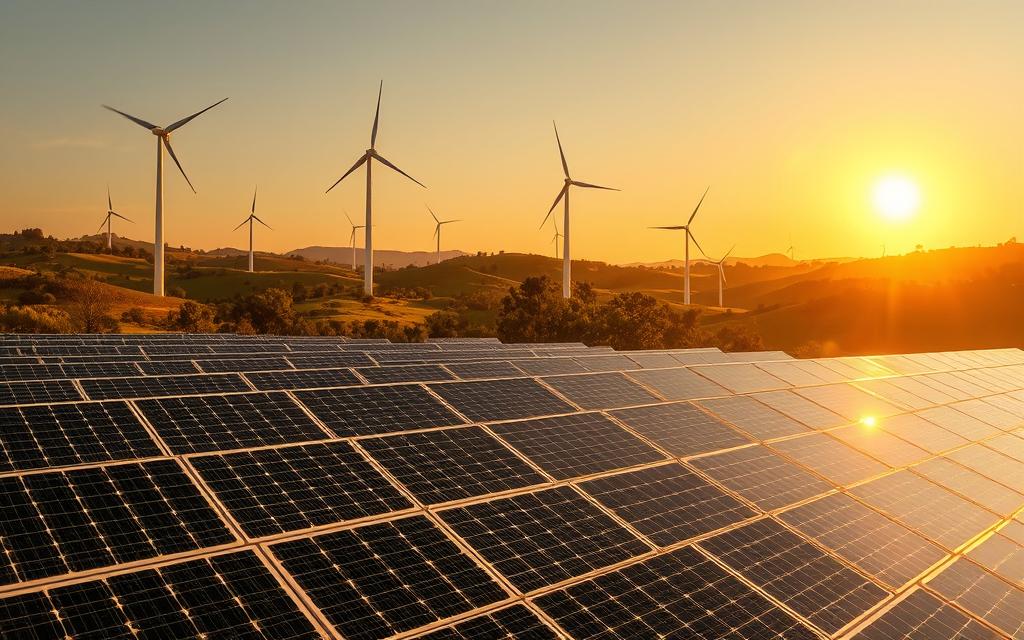
Renewable energy technologies are changing how we fight climate change. They make clean power more available and reliable than ever. This is a big step forward.
Solar Power Breakthroughs
Solar energy has seen huge improvements in recent years. New tech has made it more efficient and cheaper.
High-Efficiency Photovoltaic Panels
Today’s solar panels can convert over 22% of sunlight into electricity. This is a big jump from older models. New materials and designs are behind this leap.
These panels can make more electricity from the same space. This is great for cities where space is limited.
Tesla Powerwall for Energy Storage
The Tesla Powerwall tackles solar energy’s biggest problem: it can’t always be on. This battery stores extra energy made during the day.
At night or when it’s cloudy, you can use this stored power. The Powerwall is a key step in home energy storage.
Wind Energy Developments
Wind power is growing its share of renewable energy worldwide. Both land and sea installations are getting better.
Offshore Wind Farms like Hornsea Project
The Hornsea Project One is a huge win for offshore wind. It’s the biggest offshore wind farm in the world, off the Yorkshire coast.
It can power over one million UK homes. This shows the huge promise of offshore wind farms.
GE’s Haliade-X Turbine Efficiency
GE’s Haliade-X is the most powerful offshore wind turbine. It has a 12MW capacity and a 220-meter diameter. It’s a true engineering feat.
This turbine can power 16,000 homes. Its high efficiency comes from smart design and integration with the grid.
| Technology | Efficiency Rate | Key Advantage | Typical Installation |
|---|---|---|---|
| High-Efficiency Solar Panels | 22-24% | Space optimisation | Residential/Commercial roofs |
| Tesla Powerwall | 90% round-trip | 24/7 energy availability | Home energy systems |
| Offshore Wind Farms | 40-50% capacity factor | Massive generation scale | Coastal waters |
| Haliade-X Turbine | 63% capacity factor | Record power output | Deepwater installations |
These renewable technologies are helping cut our carbon footprint. They are real solutions that are making a big difference now.
Carbon Capture and Storage Technologies
Renewable energy helps cut future emissions. But, we need new ways to deal with carbon already in the air. Carbon capture and storage are key technologies for reducing CO2 from factories and power plants.
CCS works in three steps: capture, transport, and storage. It grabs CO2 from sources, moves it through pipes or ships, and buries it deep underground.
Direct Air Capture Systems by Climeworks
Climeworks leads in direct air capture tech. Their plants pull CO2 from the air. They use special filters in a cycle to capture carbon.
The CO2 can be stored forever underground or used in different ways. This tech is a big step towards removing old carbon from the air.
CarbonCure Technologies for Concrete
CarbonCure makes concrete greener by adding captured CO2. They mix recycled CO2 into fresh concrete. This makes the concrete stronger.
This method not only stores carbon but also makes concrete better. It shows how we can turn a big carbon emitter into a carbon sink.
These carbon capture steps are vital for industries hard to clean up. As they grow, they help us reach net-zero goals and even make emissions negative.
Smart Grids and Energy Management Systems
Modern energy systems need smart technologies to handle changing needs. Smart grids are a big change from old power systems. They use data to make the most of green energy and cut waste.

These systems use data and AI to manage power across networks. They aim to balance power use and generation. This helps avoid power shortages and cuts down on fossil fuel use.
National Grid’s Smart Grid Initiatives
The UK’s National Grid is upgrading its energy network. They want a more flexible and strong network for more green energy.
Key parts of their plan include:
- Advanced meters for real-time energy use data
- Smart substations for quick power rerouting
- Programmes to encourage using less power when it’s busy
- Energy storage to balance out green energy
These steps help manage power use better. They work with global efforts to improve energy systems.
Google Nest for Home Energy Optimisation
Google Nest brings smart grid tech to homes. It learns your habits and adjusts heating and cooling to save energy.
The Nest thermostat uses AI to set your temperature. It saves energy when you’re not home. Studies show it can cut heating and cooling costs by up to 15%.
It also has features like:
- Remote control through apps
- Reports on energy use
- Works with other smart devices
- Adapts to weather
Using smart devices like Nest with green practices helps everyone. It shows how tech can make a big difference in saving energy.
Advancements in Sustainable Transport
The transport sector is changing fast, thanks to climate technology. It’s a big step towards reducing global emissions. Now, we’re seeing more electric vehicles and hydrogen tech, making transport greener.
Electric Vehicle Innovations
Electric cars are now common, not just for a few. They perform well and don’t pollute. The tech has improved, solving old problems like range and charging.
The Tesla Model 3 is a top electric car. It uses energy well and lasts long. You can drive over 300 miles without needing to charge again.
Tesla keeps making its batteries better. They work well in any weather. This shows how battery tech is getting better for us.
BP Pulse Charging Network Expansion
BP Pulse is adding lots of new EV charging points in Britain. This will help more people use electric cars. It’s a big step towards making electric cars more accessible.
These new stations can charge your car fast. You can get 100 miles of range in just ten minutes. BP Pulse is placing them in key places, making long trips easier.
Hydrogen Fuel Cell Progress
Hydrogen fuel cells are another way to make transport green. They make electricity from hydrogen and oxygen, leaving only water behind. This makes them very clean.
These cars are good for heavy vehicles and long trips. Hydrogen gives them more energy than batteries. As more places get hydrogen stations, these cars will become more common.
Toyota Mirai Fuel Cell Technology
The Toyota Mirai is a leader in hydrogen cars. It turns hydrogen into electricity very efficiently. You can drive it for 400 miles without polluting.
Toyota has made the Mirai safe and efficient. It shows hydrogen cars can be as good as regular cars. They’re great for big vehicles where batteries are too heavy.
| Technology | Energy Source | Range | Refuelling Time | Best Application |
|---|---|---|---|---|
| Battery Electric | Grid Electricity | 200-400 miles | 30-60 minutes (fast charge) | Passenger vehicles, urban transport |
| Hydrogen Fuel Cell | Compressed Hydrogen | 300-400 miles | 3-5 minutes | Larger vehicles, long routes |
| Plug-in Hybrid | Electricity & Petrol | 400-600 miles | 2-5 hours (charge) + 5 minutes (petrol) | Transition technology, flexible use |
Electric cars and hydrogen fuel cells are both helping to cut down emissions. The choice between them depends on what you need and where you are. As they keep getting better, they’re making transport greener for everyone.
Conclusion
Technology is a powerful tool against climate change. It brings us renewable energy, smart systems, and low-carbon transport. These are key for a sustainable future.
The outlook for climate tech is promising. It’s driven by global need and ongoing research. Working together and having the right policies will help us use these technologies faster.
Investing in green projects is essential. Both businesses and governments must put money into these solutions. Every effort, big or small, helps us move forward together.
Let’s embrace these new technologies. Support green projects. By working together, we can create a cleaner, more resilient world.
FAQ
What is climate technology and how does it address the climate crisis?
Climate technology, or cleantech, is a set of innovations to fight climate change. It includes renewable energy, carbon capture, smart grids, and green transport. These technologies help cut down emissions and make us more resilient to climate impacts.
How effective are renewable energy sources like solar and wind in replacing fossil fuels?
Solar and wind energy are now as good as fossil fuels and cheaper. Solar panels and wind turbines are getting better. For example, the UK’s Hornsea wind farm and GE’s Haliade-X turbine show how much clean energy we can make. Storage solutions like Tesla Powerwall help make renewables reliable.
What role does carbon capture technology play in achieving net-zero emissions?
Carbon capture and storage (CCS) are key for removing CO₂ from the air. Companies like Climeworks capture CO₂ directly. Innovations like CarbonCure’s technology also help, by storing carbon in concrete. These efforts help us reach net-zero and negative emissions goals.
How do smart grids and energy management systems contribute to climate solutions?
Smart grids use data and AI to manage energy better. They reduce waste and make grids more stable. The UK’s National Grid is upgrading its systems for better efficiency. Devices like Google Nest thermostats learn our habits to save energy and money.
What advancements are driving the adoption of sustainable transport options?
Electric vehicles (EVs) like the Tesla Model 3 are getting better and more affordable. Charging networks like BP Pulse are growing. Hydrogen fuel cell cars, like the Toyota Mirai, offer a zero-emission option for longer trips. These changes help cut down emissions from transport.
Are these climate technologies scalable and economically viable on a global level?
Yes, many climate technologies are getting cheaper and more practical worldwide. Renewable energy costs have dropped, making big projects like wind farms and solar farms more viable. CCS and smart grids are getting more investment. EVs and hydrogen transport are growing fast. More innovation, funding, and teamwork are needed to use them more globally.
How can individuals and businesses contribute to supporting climate technology adoption?
People can use energy-saving products, choose green energy, and support eco-friendly transport. Companies can invest in clean tech, cut carbon, and push for green policies. Working together and taking responsibility is key to using these technologies more widely.