

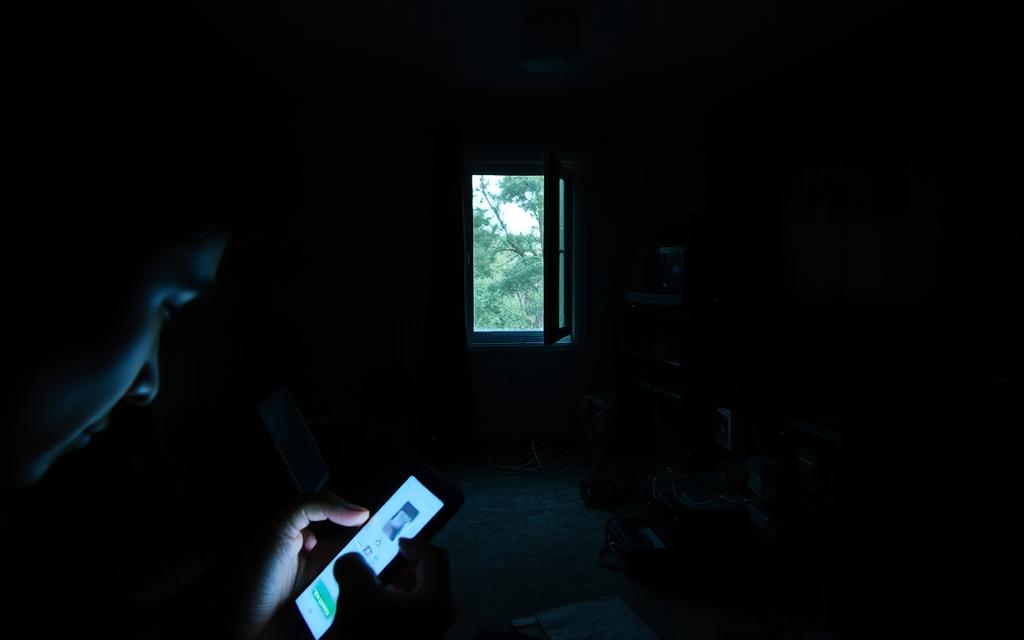
Modern digital innovations promise many benefits. Yet, many people face unexpected consequences. The constant connection in our era brings both chances and challenges.
Studies show the downsides of technology on our wellbeing. Mental health issues and physical problems are common. These effects need serious thought.
This analysis looks at the negative effects of technology often ignored. We’ll see how our digital habits affect daily life.
Knowing these patterns helps us make better choices. It’s about being more aware of our device use.
The Impact of Technology on Mental Health and Wellbeing
Digital devices have changed how we connect and talk to each other. But, this constant connection has big psychological costs. The link between technology and mental health is worrying, as studies show emotional problems linked to our digital habits.
Increased Anxiety and Stress from Constant Connectivity
Modern tech makes us always on and ready to respond. This leads to “anticipatory anxiety” – the worry of getting messages or updates.
Many feel stressed because they can’t stop checking their devices. This stress affects work and personal life. It’s a big reason for anxiety in tech users.
Social Media and Its Role in Depression and Loneliness
Social media is meant to bring people together but often does the opposite. Research shows it can make us feel lonely and depressed. The problem of social media depression comes from:
Related Posts:
- How Technology Benefits Students Enhancing Learning…

- How Technology Changed the Car Industry From EVs to…

- What Is Flow Technology Optimizing Processes and Systems

- What Is Clean Coal Technology Designed to Do…

- How to Know Technology A Guide to Understanding Tech Trends

- How Technology Can Help Solve Climate Change…

- Shallow online interactions instead of real connections
- Less practice in face-to-face communication
- Feeling left out and excluded
Studies by Medical News Today show a link between too much social media and depression. People who spend too much time online feel lonely, even with many “friends” online.
Comparison Culture and Self-Esteem Issues
Social media makes us compare ourselves to others’ perfect lives. This affects how we see ourselves, leading to body image and self-esteem problems. Young people are hit hard by these unrealistic standards.
Seeing others’ best moments makes us feel bad about ourselves. This is part of the social media depression problem. Finding ways to use technology wisely is key to keeping our mental health strong. For tips, check out managing technology use advice.
The effects of digital stress are a big challenge for mental health today. Knowing these impacts helps us build better relationships with our devices and protect our mental wellbeing.
How Technology Affects Physical Health
Technology brings many benefits, but it also has a downside for our health. The ease of using digital devices can harm our bodies. This leads to health issues that older generations didn’t face.
Sedentary Lifestyles and Obesity
Today, we spend a lot of time sitting. This is true whether we’re at work, at home, or on the move. Sitting for long periods can lead to weight gain and obesity.
Instead of being active, we often watch screens. This means we burn fewer calories. Office workers, for example, may sit for 8 hours or more each day. This has been called “sitting disease” by health experts.
Digital Eye Strain and Sleep Disruption
Looking at screens for too long can cause eye problems. Symptoms include dry eyes, blurry vision, and headaches. The blue light from devices also messes with our sleep.
Doctors suggest a simple rule to help our eyes. Every 20 minutes, look at something 20 feet away for 20 seconds. This can help prevent eye strain.

Using devices at night is a big problem. It can make us tired and affect how well we do during the day.
The Rise of “Tech Neck” and Postural Problems
Looking down at devices for a long time can hurt our necks. This is known as “tech neck.” It puts a lot of pressure on our neck muscles and bones.
Bad posture from using devices can also cause other health issues:
- Shoulder tension from leaning forward
- Back pain from sitting wrong
- Repetitive strain injuries from typing
These problems show how technology and our health are linked today. It’s important to be aware and take steps to stay healthy in our digital world.
Does Technology Have a Negative Effect on Our Social Lives?
Underneath the digital world, a growing problem of social disconnection and family stress exists. Technology lets us connect in new ways but also blocks real human interaction. Studies show too much screen time leads to poor social skills and feeling lonely.
Erosion of Face-to-Face Communication Skills
Digital communication has changed how we talk to each other, often hurting our social skills. Young people, in particular, struggle with reading body language and eye contact. Texting and messaging have cut down on chances to practice talking.
Medical News Today found that heavy social media users find face-to-face talks hard. They feel anxious and use digital tools to avoid real conversations. Losing these basic skills is a big change for society.
The Illusion of Connection in the Digital Age
Social platforms make us think we’re connected, but often we’re really alone. The perfect images online make us feel bad about ourselves. Many feel “digital lonely” – having lots of online friends but no real ones.
This mix of being connected but feeling alone is a big problem today. Having lots of online friends doesn’t mean we have real ones. This makes us feel more isolated, even with lots of digital connections.
Family Dynamics and Screen Time Conflicts
Technology brings new challenges to family life. Devices compete for our attention, taking away from time together. Families often argue about how much screen time is okay.
Too much screen time is linked to:
- Less talking during meals
- Less joining in on activities
- More fights over screen rules
- Weaker feelings between family members
Dealing with screen time is a big challenge for parents today. Finding the right balance between technology’s benefits and its downsides is key. Setting healthy digital limits is important for keeping family bonds strong in our digital world.
The Downsides of Technology in the Workplace
Digital tools have changed work places a lot. But, they’ve also brought big challenges for both workers and companies. The use of technology at work adds new pressures that go beyond usual work issues.
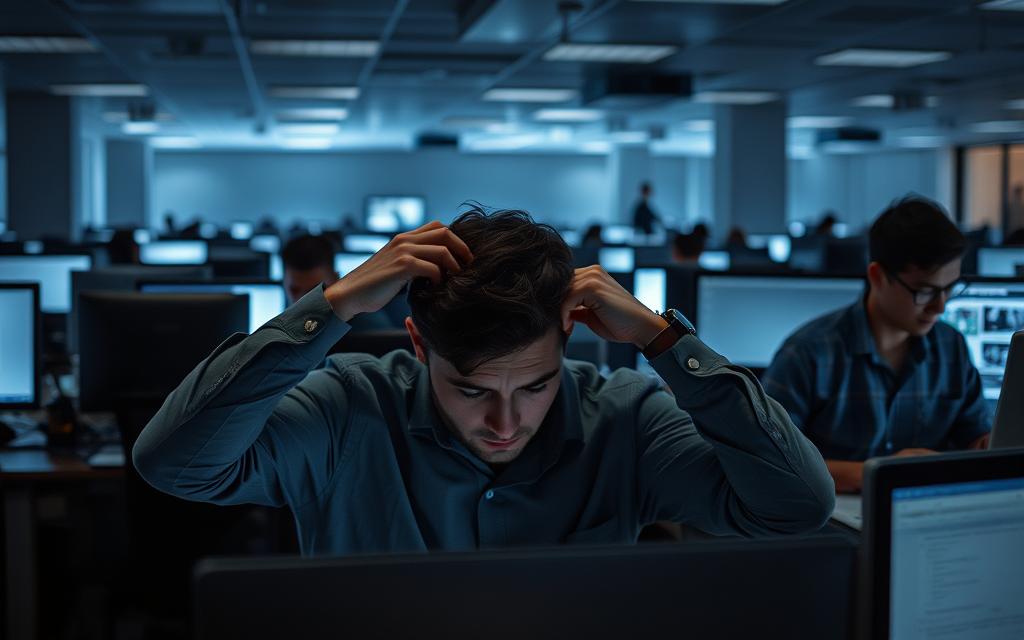
Burnout from Always-On Culture
The need to be always available is a big problem. Smartphones and laptops mean many people can’t really stop working.
This constant connection leads to technology burnout. Workers find it hard to separate work from personal life. The stress of always being ready to reply to emails and messages is high.
Studies show that those in always-on jobs get more tired and are less happy at work. It’s hard to take a break from work when work and personal life mix too much.
Privacy Concerns and Surveillance
Workplaces now use big monitoring systems. These track what employees do, from typing to screen watching. This raises big privacy issues.
Many companies use software to check how productive workers are, but they don’t always tell them. This makes workers feel like they’re always being watched and judged.
This culture of watching can make people feel untrusted and worried. They might feel they need to keep working all the time, even when they need a break.
Job Displacement Due to Automation
Artificial intelligence and automation are changing jobs in many areas. They create new jobs but also make some old ones disappear.
Jobs in manufacturing, admin, and some professional areas are being changed a lot. Workers in these fields need to learn new skills fast.
The speed of tech change is often faster than training can keep up. This makes it hard for workers in certain jobs to feel secure.
Companies need to think about how to keep things fair when using new tech. The impact on jobs is a big workplace technology downside that needs careful handling.
Technology’s Effect on Attention and Productivity
Our digital devices promise to make us more efficient. But they often do the opposite. The endless stream of information and alerts makes it hard to focus and do meaningful work. This section looks at how modern technology affects our brains and work.
The Myth of Multitasking and Cognitive Overload
Many think they can handle lots of digital tasks at once. But research shows this is just fast switching between tasks. Our brains can’t handle all the information at once.
This constant switching causes cognitive overload. Our mental resources get used up. Quality of work drops as we spread our attention too thin. True technology productivity needs focused attention, not divided efforts.
Notification Fatigue and Constant Interruptions
Digital platforms send us endless alerts and updates. Each alert takes our attention away from what we’re doing. This makes it hard to stay focused.
Studies say it takes 23 minutes to get back into deep focus after an interruption. All these distractions cut down our daily output. The constant need to respond is a real barrier to effective work online.
Reduced Deep Work and Creativity
Always being connected hinders deep, meaningful work. The need to respond quickly leaves little time for deep thinking. This makes it hard to be creative.
Creative ideas often come when we’re not distracted. When technology takes our attention, we miss these moments. The link between attention span technology and creativity is important to understand.
| Work Pattern | With Technology Interruptions | With Focused Attention | Productivity Impact |
|---|---|---|---|
| Task Completion Time | 40% longer | Optimal pace | Significant delay |
| Error Rate | 50% higher | Minimal errors | Quality reduction |
| Creative Output | Limited ideas | Innovative solutions | Substantial difference |
| Mental Fatigue | High levels | Manageable | Energy conservation |
Knowing these patterns helps us improve our digital habits. By setting focused work times and managing alerts, we can regain our attention and boost our output. The journey to better technology productivity starts with understanding these challenges.
Environmental and Societal Costs of Technology
Technology has big effects on the environment and society. It affects people all over the world. We need to work together to solve these problems.
E-Waste and Sustainability Challenges
Technology changes fast, leading to a big e-waste technology problem. Millions of devices are thrown away each year, polluting our environment.
Old devices have harmful materials like lead and mercury. If not disposed of right, these can harm our soil and water.
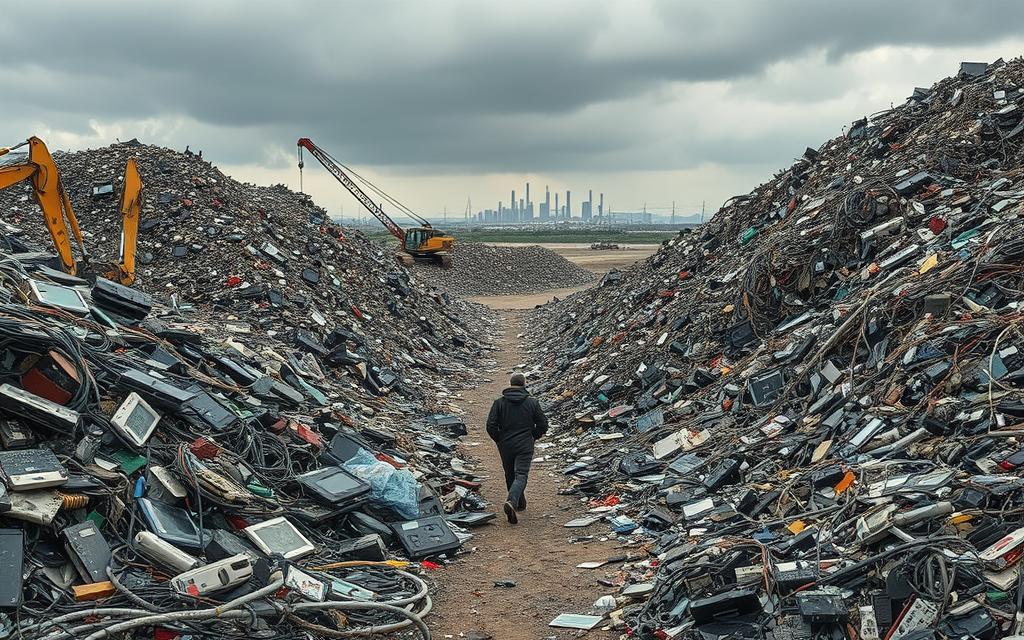
Making new tech uses a lot of energy and resources. This makes greenhouse gases, hurting our climate.
Many places don’t have good recycling for old tech. This is a big challenge that needs new ideas from makers and users.
Digital Divide and Inequality
The digital divide is a big issue in technology. Not everyone has equal access to digital tools.
Some groups, like those in poor areas or with disabilities, struggle to get online. This makes it hard for them to learn and earn money.
Studies show the digital divide affects:
- Rural versus urban populations
- Low-income households
- Senior citizens and disabled individuals
- Developing nations versus industrialised countries
We need to work together to fix this. Everyone should have the chance to use technology.
Ethical Issues in Data Collection and AI
AI raises big questions about privacy and fairness. These systems often don’t explain how they work or who’s accountable.
Companies collect a lot of data without telling users. This can be a big invasion of privacy.
AI can also show biases, leading to unfair decisions in jobs, loans, and law enforcement.
| Ethical Concern | Potential Impact | Recommended Solution |
|---|---|---|
| Data Privacy Violations | Identity theft and personal exploitation | Stronger regulatory frameworks |
| Algorithmic Bias | Discriminatory outcomes | Diverse development teams |
| Lack of Transparency | Unaccountable decision-making | Explainable AI requirements |
| Surveillance Capitalism | Erosion of personal freedom | Strict data usage limitations |
The effects of technology go beyond just now. As shown in this look at technology’s environmental impact, we need to tackle both the planet and people.
We must innovate in a way that cares for both humans and the planet. Making tech that’s good for the earth is our shared duty.
Conclusion
Our journey into technology’s effects shows its wide-ranging impacts. These include mental health, physical wellbeing, and social interactions. It also affects workplace dynamics, cognitive function, and the environment.
It’s clear that digital advancements are both good and bad. They need careful handling. This summary highlights the need for balance in our use of technology.
Setting limits on device use and taking breaks from screens is key. The American Psychological Association suggests structured digital habits. This helps reduce the negative sides of technology.
Technology is a big part of our lives, but we must use it wisely. Being mindful and aware of its influence is important. This way, we can enjoy its benefits without letting it control us.
This summary reminds us to always check our relationship with digital tools. By being aware and taking action, we can control how technology impacts us. This is essential for a healthy balance in our lives.
FAQ
How does technology contribute to mental health issues?
Technology, like constant connectivity and social media, can make us anxious and stressed. It’s always on, always ready. Social media shows us perfect lives, making us feel bad about ourselves. This can lead to depression and loneliness.
What are the physical health risks associated with technology use?
Using technology too much makes us sit a lot, leading to obesity. It can also hurt our eyes and disrupt sleep. Plus, it can cause neck and hand problems from using devices for too long.
Does technology negatively affect social interactions?
Yes, it can. Technology makes us think we’re connected, but we’re not really. It can make us feel alone and cause misunderstandings. It also leads to fights over screen time, making us less connected to each other.
What are the downsides of technology in the workplace?
Technology can make us work too much, blurring the line between work and life. It also raises privacy concerns and can make jobs disappear. This is because of automation and artificial intelligence.
How does technology impact attention and productivity?
Technology distracts us a lot, making it hard to focus. It’s not good for multitasking. Too much information can overwhelm us, making us less creative and productive.
What are the environmental and societal costs of technology?
Technology creates a lot of waste and uses a lot of energy. It also makes some people feel left out. There are big questions about how we use data and artificial intelligence.
Can technology use lead to sleep problems?
Yes, it can. Looking at screens before bed messes with our sleep. It can make it hard to fall asleep and reduce the quality of our sleep.
Is there a link between social media and poor self-esteem?
Yes, research shows that social media can harm our self-esteem. It makes us compare ourselves to others, leading to anxiety and depression.
How does technology affect family dynamics?
Too much screen time can change how families interact. It can lead to fights over who gets to use devices. This can weaken family bonds and communication.
What measures can mitigate the negative effects of technology?
We can use technology wisely. Following the 20-20-20 rule can help our eyes. Setting limits on screen time and choosing to spend time with people face-to-face is important. Taking breaks from technology can also help find a balance.