

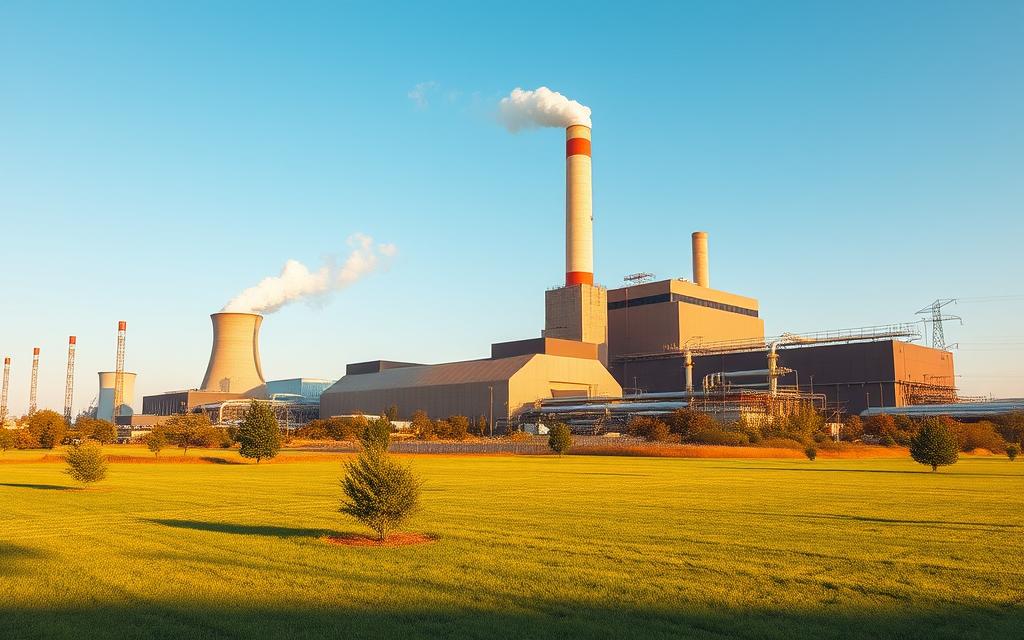
Coal is a key energy source worldwide, powering many industries and homes. Its use has big environmental costs that need quick action.
The burning of coal releases about 15 billion tonnes of carbon dioxide every year. This is a big problem for global warming. It shows we really need good solutions for the environment.
Clean coal technology is a new way to make energy without harming the planet. It uses advanced systems to cut down on bad emissions and make energy more efficient.
Today’s emission reduction technology tackles many pollutants with smart coal pollution control methods. Its main goal is to keep using coal without making climate problems worse.
This new technology is a step towards using energy in a way that’s better for our planet. It’s a real solution to a big environmental challenge we face today.
Understanding Clean Coal Technology’s Core Purpose
Clean coal technology is a set of new ways to make coal power cleaner. It aims to reduce the harm coal power plants cause to the environment. These methods help meet today’s environmental compliance standards.
Defining Clean Coal Technology
The CCT meaning covers many technologies that lessen coal’s environmental impact. These systems work in three main steps:
- Pre-combustion technologies that treat coal before burning
- Combustion techniques that minimise emissions during burning
- Post-combustion systems that capture pollutants after energy generation
Examples like integrated gasification combined cycle (IGCC) and fluidized bed combustion show how these technologies combine. They help make cleaner energy.
Related Posts:
- How Technology Can Help Solve Climate Change…

- What Is Flow Technology Optimizing Processes and Systems
- Does Technology Have a Negative Effect on Our Lives…

- What Is Quantum Computing Technology The Future of…

- How Technology Changed the Car Industry From EVs to…

- How Technology Benefits Students Enhancing Learning…

The Emission Reduction Imperative
Coal power plants have big coal emission challenges. These issues harm both people’s health and the environment. The main pollutants are:
- Carbon dioxide (CO₂) contributing to climate change
- Sulphur dioxide (SO₂) causing acid rain formation
- Nitrogen oxides (NOx) leading to smog and respiratory issues
- Particulate matter affecting air quality and lung health
Today, strict environmental compliance rules apply. The Clean Air Act and other laws require big cuts in harmful emissions.
Knowing what CCT meaning is about is more than just tech talk. It’s about finding a balance between keeping the lights on and protecting our planet.
What Is a Clean Coal Technology Designed to Do
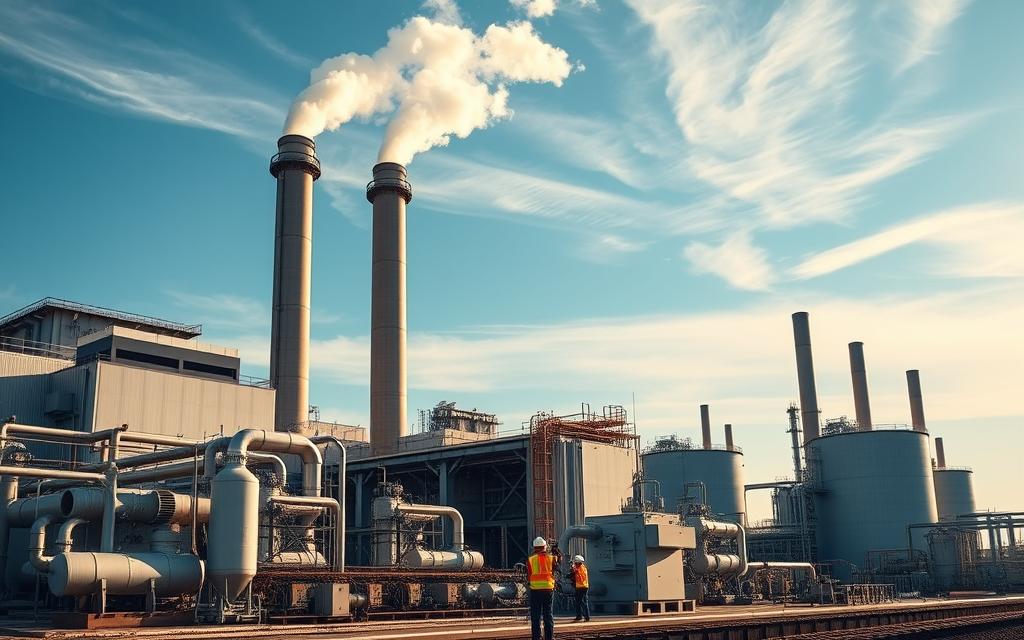
Modern clean coal systems tackle many pollution issues at once. They make coal power cleaner and more efficient. This is done without losing energy.
Primary Objectives and Functions
The main coal technology objectives are to get more energy and harm the environment less. These systems do this by improving how they work together.
Boosting efficiency is a big goal. New burning methods help power plants get more energy from coal. This means using less coal and making less pollution.
Catching pollutants is another key task. Modern systems can grab up to 90% of carbon dioxide emissions. This shows how well emission control systems are working.
Reducing waste is the third main goal. These technologies turn waste into useful materials. This cuts down on landfill waste and adds value to what was once trash.
Environmental Impact Mitigation
Clean coal technology has big benefits for the environment. Each part of the system tackles different pollution problems.
Removing sulphur dioxide is a big win. Flue gas desulphurisation systems can cut sulphur compounds by over 95%. This helps prevent acid rain.
Lowering nitrogen oxide emissions is also key. Low-NOx burners and selective catalytic reduction systems can reduce NOx by 80-90%. This helps clear the air and improve health.
Catching fine particles is another important task. Electrostatic precipitators and fabric filters can remove over 99.9% of particles. This makes the air much cleaner.
Stopping heavy metals from being released is vital. Advanced filters catch mercury, arsenic, and other harmful metals. This keeps them out of the air and water.
These technologies show how emission control systems can solve coal’s environmental problems. They do this while keeping its energy benefits.
Key Technologies in Emission Reduction Systems
Clean coal initiatives rely on advanced systems to cut down environmental harm. These systems change how coal-fired power plants work, making them more eco-friendly. They keep the plants running well.
Emission control technologies have grown a lot. They offer many ways to tackle different pollutants. Each system has its own role in making coal cleaner.
Carbon Capture and Storage (CCS)
CCS is a key technology for managing emissions. It stops carbon dioxide from getting into the air by catching it at different stages of power making.
CCS Operational Mechanisms
CCS uses three main capture methods. Amine scrubbing uses chemicals to grab CO₂ from flue gases. Oxyfuel combustion burns coal in pure oxygen, making CO₂ streams easier to capture.
Pre-combustion capture changes coal into synthesis gas before it’s burned. This makes it easier to separate CO₂. The captured CO₂ is then compressed and sent to storage sites, often in deep underground formations.
Implementation Challenges and Solutions
CCS faces big challenges, like high costs and energy needs. The extra power needed can cut plant efficiency by 20-30%.
“The integration of carbon capture technology represents both an engineering challenge and an economic opportunity for the energy sector.”
Building the needed infrastructure is another big problem. It requires long pipelines for CO₂ transport. Solutions include government help, better technology to cut costs, and using old infrastructure when possible.
| Capture Method | Efficiency Rate | Implementation Cost | Suitable Applications |
|---|---|---|---|
| Amine Scrubbing | 85-90% | High | Existing plant retrofits |
| Oxyfuel Combustion | 90-95% | Very High | New construction |
| Pre-combustion | 80-85% | Medium-High | IGCC facilities |
Flue Gas Desulphurisation Systems
Flue gas treatment systems aim to cut sulphur dioxide emissions, a major cause of acid rain. They use chemical processes to remove sulphur compounds before gases leave the stack.
Wet scrubbers are the most common method. They spray flue gas with limestone and water slurry. This creates synthetic gypsum, a useful byproduct in construction. Keeping the right conditions is key to remove 95-98% of sulphur compounds.
Dry sorbent injection is another option, mainly for smaller plants or those with space issues. It adds powdered sorbents to the flue gas, but is less efficient.
Advanced Combustion Techniques
Advanced coal combustion technologies change how we get energy from coal, reducing emissions. They aim to boost efficiency and cut pollutant formation at the combustion stage.
Integrated gasification combined cycle (IGCC) systems convert coal to synthesis gas before burning. This syngas, mostly hydrogen and carbon monoxide, burns cleaner than raw coal. It also makes carbon capture easier and boosts overall efficiency.
Fluidized bed combustion is another big step forward. It suspends coal particles in air during burning, improving heat transfer and reducing NOx formation.
Circulating fluidized bed systems are even more efficient, thanks to continuous recycling of bed material. These advanced methods can be 5-10% more efficient than traditional coal combustion.
Carbon Dioxide Reduction Strategies
Reducing carbon dioxide emissions is a big challenge in clean coal technology. There are two main ways to do this: before and after coal is burned. Each method has its own benefits and technical needs for power plants.
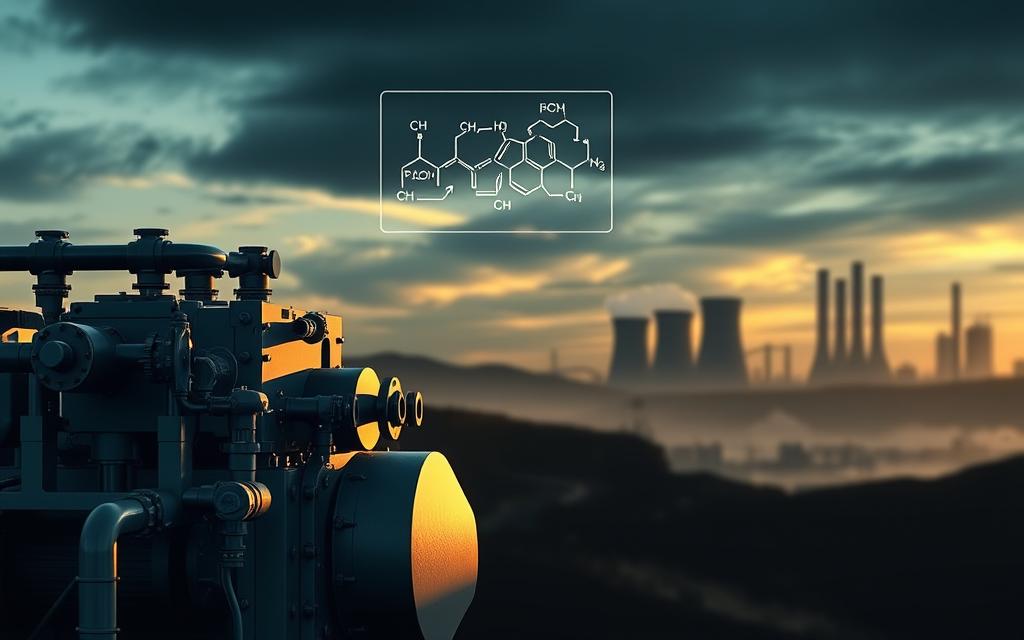
Pre-combustion Capture Methods
Pre-combustion technology changes coal before it’s burned. It starts with gasification, where coal turns into syngas with steam and oxygen. Syngas is mostly carbon monoxide and hydrogen.
A shift reactor then changes carbon monoxide to carbon dioxide with more steam. This makes a gas stream with lots of hydrogen and CO2. It’s easier to separate CO2 at this stage.
IGCC plants show how this works in real life. They’re more efficient and can capture carbon before burning. The hydrogen can be used as clean fuel for turbines or other uses.
Post-combustion Capture Systems
Post-combustion systems work on flue gases after coal is burned. They face tougher conditions because CO2 is less concentrated than in pre-combustion streams.
Amine-based solvents are often used to grab CO2 from exhaust gases. The amine solution meets flue gas in an absorber unit. There, it captures CO2 molecules. Then, the rich amine solution goes to a regenerator unit.
In the regenerator, heating the solution releases CO2 for storage or use. This process needs a lot of energy, which affects plant efficiency. Other methods like membranes and solid sorbents are being explored but are not as developed.
Places like Petra Nova in Texas have shown how big post-combustion capture can work. But, these systems face big technical hurdles. They need a lot of energy to work and deal with low CO2 levels in flue gas.
Addressing Multiple Pollutant Types
A complete clean coal approach uses systems that control many pollutants from coal burning. These solutions tackle nitrogen oxides, particulate matter, and trace metals at once. This creates strong platforms for emission control, greatly reducing harm to the environment.
Nitrogen Oxide Control Systems
Modern NOx control systems use different methods to cut down nitrogen oxide emissions. Low-NOx burners can reduce emissions by up to 40% by managing oxygen levels and combustion temperatures.
Reburning methods create fuel-rich zones to break down NOx compounds. Selective catalytic reduction systems are the most effective, reducing emissions by up to 90% through chemical reactions with ammonia or urea.
These methods work together to lower nitrogen oxide emissions during combustion. Power plants can use these technologies alone or together for the best results.
Particulate Matter Filtration
Effective particulate filtration is key for removing fly ash and solid particles from flue gases. Electrostatic precipitators use electrical charges to attract and collect particles, achieving 99% removal efficiency.
Fabric filter systems, or baghouses, also offer effective filtration through physical barriers. These systems capture particles on fabric surfaces, cleaning themselves regularly to stay effective.
Mechanical collectors use centrifugal force to separate particles from gas streams. Each technology has its own strengths based on particle size, gas temperature, and operational needs.
Heavy Metal Capture Technologies
Heavy metal capture technologies target mercury and other trace metals from coal burning. Activated carbon injection systems are the most common solution, injecting treated carbon into flue gases to adsorb mercury compounds.
These systems can remove mercury at rates over 90% when set up right. Other technologies include chemical additives and special sorbent materials for different metals.
Many modern plants use these methods with broader clean coal initiatives for a complete emission control strategy. This approach tackles multiple pollutants at once, improving efficiency over separate systems.
The ongoing development of these technologies shows the industry’s dedication to reducing environmental harm while keeping energy secure. These advanced systems mark a big step forward from traditional methods.
Practical Implementation in Power Generation
The move from clean coal ideas to real-world use is key for cutting emissions. This shift happens in two main ways: updating old plants and building new ones with clean tech.
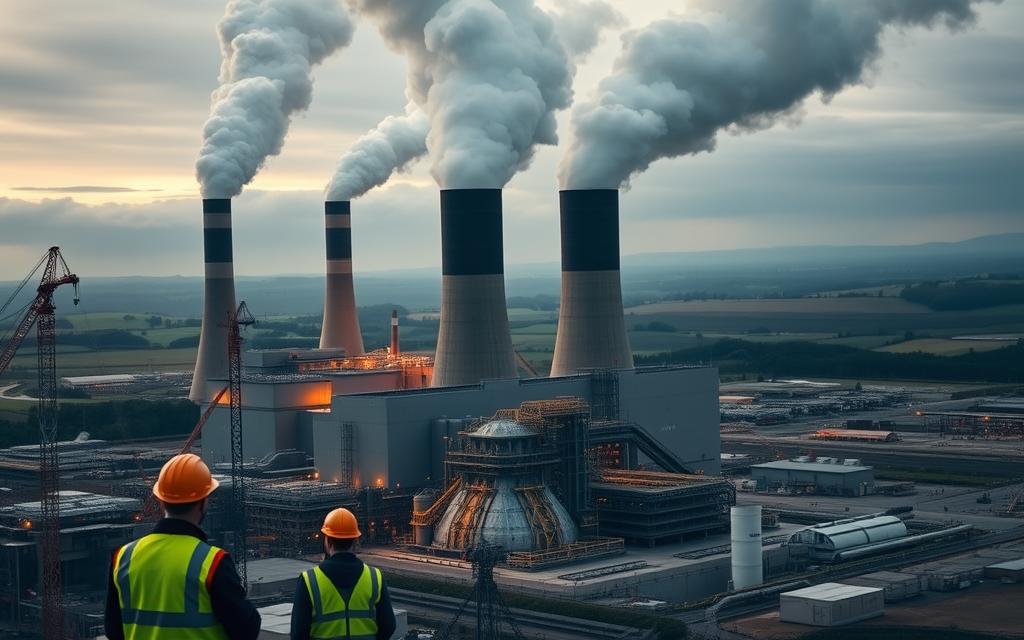
Retrofitting Existing Infrastructure
Old coal power stations are nearing the end of their life. This opens up chances for cleaner options or big upgrades. Adding carbon capture systems to these plants is tricky and costly.
Space is a big issue at older sites. Mixing new tech with old gear is hard. Also, downtime for upgrades must be kept short to keep the power flowing.
Some projects show it can be done. The Petra Nova in Texas captured over 90% of carbon emissions. This proves that making old plants cleaner is possible.
New Plant Design Considerations
New coal plants start with clean tech, avoiding many retrofitting problems. They aim to be green and cost-effective from the start.
Modern plants can be very efficient, up to 48% before adding carbon capture. This means they use less fuel and make less pollution.
Choosing the right materials is key for these efficient plants. Special alloys can handle high heat and pressure well. Making sure all parts work together is also important.
Whether to update old plants or build new ones depends on many things. Laws, money, and the state of the current plant all play a part. Each method has its own benefits for different situations.
Economic and Technical Considerations
Setting up systems to cut emissions costs a lot and comes with technical challenges. It’s important to look at both the money side and the practical issues of using clean coal technologies.

Cost-Benefit Analysis
Clean coal tech needs a big upfront investment. The cost can be 20-30% more than old systems, like ultra-supercritical HELE units.
But, these systems can save money over time. They use less fuel, cutting costs by about 75% compared to old plants. Plus, they help the environment, making them more valuable.
Energy use is another key factor. Most systems to capture carbon need 20% more energy. This affects costs and how well they work.
Worldwide, over $1 billion is spent each year on research for these technologies. This shows how big the effort is to make them work.
| Technology Type | Capital Cost Increase | Operational Savings | Energy Penalty |
|---|---|---|---|
| Ultra-supercritical HELE | 20-30% | 25% fuel reduction | 5-8% |
| Carbon Capture Systems | 40-60% | Carbon credit value | 20-25% |
| Flue Gas Desulphurisation | 15-20% | Compliance benefits | 3-5% |
| Particulate Controls | 10-15% | Maintenance reduction | 1-2% |
Technical Feasibility Assessment
How easy it is to use clean coal tech varies a lot. Some systems, like those for particles, work well. But, new carbon capture tech faces more challenges.
Getting these systems to work on a big scale is hard. It needs mature tech, the right infrastructure, and skilled workers.
Adding new systems to old plants is tricky. It needs careful planning to keep everything running smoothly.
Some tech is ready to use, while others are just ideas. This affects how fast and safely they can be used.
It’s important to test these systems well. Failing can cost a lot of money. So, making sure they work is key.
As rules on emissions get stricter, clean coal tech becomes more appealing. This changes how we choose and use these technologies.
Conclusion
Clean coal technologies are a smart way to meet our energy needs while protecting the environment. They offer a detailed look at how they reduce emissions across different pollutants.
The future of reducing emissions relies on finding solutions that work now. For places heavily reliant on coal, these technologies are key. They help keep energy flowing while greatly reducing harm to the environment.
Looking ahead, clean coal tech shows both hope and challenges. The costs and technical issues are big, but the benefits for cutting emissions are clear.
Clean coal tech is a stepping stone, not the final answer, in our energy shift. It lets us keep getting power reliably while we move towards cleaner, greener energy options.
FAQ
What is the fundamental purpose of clean coal technology?
Clean coal technology aims to make coal use better for the environment. It reduces harmful emissions like carbon dioxide, sulphur dioxide, and nitrogen oxides. This makes coal a more sustainable energy source.
How does clean coal technology address carbon dioxide emissions?
It uses methods like carbon capture and storage (CCS). CCS includes pre-combustion and post-combustion techniques. These capture CO₂, preventing it from being released into the atmosphere.
What are the main technologies used in clean coal systems for emission reduction?
Key technologies include carbon capture and storage (CCS), and flue gas desulphurisation systems. Advanced combustion techniques and integrated control systems also play a role. These help reduce emissions of pollutants.
Can clean coal technologies be retrofitted to existing power plants?
Yes, retrofitting is possible but faces challenges. Space constraints, integration complexities, and costs are major hurdles. Systems like flue gas desulphurisation have been successfully added to existing plants.
What economic factors influence the adoption of clean coal technology?
Adoption depends on costs, energy penalties, and regulatory pressures. Carbon pricing mechanisms and financial returns also play a role. Projects like Petra Nova show both feasibility and cost challenges.
How effective are clean coal technologies at reducing pollutants other than CO₂?
They are very effective. For example, flue gas desulphurisation removes over 90% of SO₂. Selective catalytic reduction reduces NOx by up to 90%. Particulate matter capture is also over 99% effective.
What role does clean coal technology play in the broader context of climate change and energy transition?
It is a transitional strategy for regions with coal dependencies. It helps reduce emissions while maintaining energy security. But, it’s not a standalone solution. Diversifying to renewable and lower-carbon sources is also needed.